Thursday, September 25, 2025

The Harsh Reality of a Slave


The Harsh Reality of Daily Life Under Slavery


The institution of slavery in America created a system of dehumanizing conditions that defined every aspect of enslaved people's existence. Understanding the daily realities faced by millions of individuals helps illuminate one of the darkest chapters in American history and the resilience of those who endured unimaginable hardships.

Before Dawn: The Beginning of Endless Labor

Each day for enslaved individuals began well before sunrise, often around 4 or 5 AM. The sound of bells or overseers' calls would pierce the darkness, signaling the start of another grueling day. There was no gentle awakening or time for personal preparation. Instead, enslaved people were expected to immediately transition from whatever rest they could manage to intense physical labor that would continue until well after sunset.

Living Conditions: Overcrowded and Inadequate Shelter


conditions mthe living quarters provided to enslaved people reflected the complete disregard their enslavers had for their well-being. Families were crammed into small, poorly constructed shacks that offered minimal protection from the elements. These structures typically housed multiple families, with little privacy or personal space. The overcrowded ade rest difficult and contributed to the rapid spread of illness and disease throughout enslaved communities.


Surviving Scarcity: Enduring Deprivation

Daily life was characterized by scarce resources and harsh conditions that enslaved people were forced to endure with remarkable strength. Food rations were minimal and often of poor quality, clothing was inadequate for weather conditions, and medical care was virtually nonexistent.

 Despite these deliberate deprivations designed to 


maintain control and maximize profit, enslaved communities developed strong bonds of mutual support and cultural preservation that sustained them through generations of oppression.

The daily experiences of enslaved people represent both humanity's capacity for cruelty and the extraordinary resilience of the human spirit.

Tuesday, September 23, 2025

How the Women's Rights Movement Emerged from the Abolitionist Movement


The women's rights movement in America did not emerge in isolation—it grew directly from the antislavery cause. For those of us committed to abolishing slavery, the fight for human dignity inevitably led us to confront another form of bondage: the systematic oppression of women. The very principles that drove our antislavery work became the foundation upon which women would build their own liberation movement.

Women Find Their Voice Through Antislavery Work

Our movement provided women with their first taste of public activism. In the 1830s, when society dictated that women remain in their "separate sphere" of domesticity, the antislavery cause offered a compelling moral imperative that transcended social conventions. 

Women like Angelina and Sarah Grimké, daughters of a South Carolina slaveholder, found their voices through antislavery work. Their personal witness to slavery's horrors gave them unassailable moral authority to speak publicly, even when society deemed such behavior unseemly for women.

These female abolitionists proved invaluable to our cause. They organized boycotts of slave-produced goods, circulated petitions door-to-door, and appealed to other women's maternal instincts about the separation of enslaved families. Through this work, they gained practical experience in organizing, fundraising, and public speaking that would later serve the women's rights movement.

The Contradiction Becomes Clear

As women became more vocal in antislavery work, they encountered a troubling paradox. How could they demand full humanity and rights for enslaved people while accepting their own legal and social subordination? Sarah Grimké articulated this tension perfectly when she observed that investigating the rights of slaves led her to better understand her own lack of rights.

This contradiction crystallized at the 1840 World Anti-Slavery Convention in London, where female delegates were denied seats and forced to sit behind a curtain. Among those excluded were Lucretia Mott and Elizabeth Cady Stanton, who spent hours discussing the "woman question" while male counterparts debated freedom for enslaved people. The irony was bitter: women who had traveled across an ocean to advocate for human rights were themselves denied basic recognition as equals.

Shared Philosophy and Strategy

Our antislavery movement provided women with both the philosophical framework and practical tools for their own liberation struggle. The natural rights philosophy we used to condemn slavery—that all humans are created equal and endowed with inalienable rights—applied equally to women's condition. If enslaved people deserved freedom because of their inherent human dignity, how could women be denied basic rights for the same reason?

Women activists noted striking legal similarities between wives and enslaved people. Both lacked property rights, both could not make contracts, both were subject to physical correction by their masters or husbands, and both were denied legal personhood. This comparison helped illuminate the systematic nature of women's oppression while providing a powerful rhetorical framework for demanding change.

Building Networks and Claiming Moral Authority

The antislavery movement fostered connections between women across racial and class lines. Middle-class white women identified with enslaved women through shared experiences of legal powerlessness. Female antislavery societies became training grounds for women's organizing, providing experience in collective action and creating networks that would support future women's rights efforts.

The religious revival that fueled our antislavery movement also empowered women to claim moral authority. If women had souls equal to men's and could receive divine inspiration, their exclusion from public speaking and decision-making seemed increasingly unjustifiable.

From Seneca Falls to Lasting Legacy

When Elizabeth Cady Stanton organized the Seneca Falls Convention in 1848, she deliberately modeled the Declaration of Sentiments on the Declaration of Independence, just as we abolitionists had done. The convention grew directly from relationships forged in antislavery work and represented the formal birth of the women's rights movement.

From our antislavery perspective, the emergence of the women's rights movement validated our core principles. We had argued that slavery corrupted the entire society, including through the subordination of free women. The women's rights movement proved that the logic of human equality, once unleashed, could not be confined to a single cause.

The women who first raised their voices against slavery discovered something profound: in fighting for the freedom of others, they found their own voices. Our fight against slavery inevitably became a fight for universal human rights, demonstrating that true freedom requires the liberation of all people from all forms of bondage.

Friday, September 19, 2025

Market Place of Ideas


                                                            Image of John Milton

 This value was suggested by John Milton. the idea is that we want all ideas to be out on the table. the worst thing that could happen is the government intervening with political ideas. as a country, we get to decide which are the better ideas. this whole idea leads back to the prerequisite for democracy; the government gets its power only thought the consent of the governed. <p>

This value stands firmly against requiring a license to print or publish. In today's world, social media is a major role in everyone's life. Often, this is where many citizens get their information about what is happening in the country as well as other parts of the world. social media is a toll, that if used correctly
, can be be incredibly powerful and useful. <p>

The government is very well aware of how influential powerful this tool is, and at times  tried to stop multiple platforms. in 2019 the Biden Administration attempted to ban the application Tik Tok, as it became a powerful tool where anyone could speak their mind and bring up important topics.This move sparked widespread debate. This goes against citizens first amendment right and market place of ideas, a concept that insists all voices should be heard, and the best ideas will rise through public discourse. Silencing platforms undermines the democratic process and limits the diversity of thought. <p>


                                        Court Room of Kansas v. United States

Marketplace values are more than economic ideals, they’re the foundation of a fair, dynamic, and responsive economy.Another example is the court injunction in Kansas v. United States, which blocked DACA recipients from enrolling in ACA plans across 19 states. This decision halted coverage for thousands, not based on market performance or consumer demand, but on political and legal interpretations. It’s a stark reminder of how government actions can override market signals and consumer needs. <p>

When governments respect these values, markets flourish. When they don’t, inefficiency and inequality grow. As citizens and consumers, we must stay vigilant and advocate for policies that preserve the integrity of the marketplace. After all, a healthy market isn’t just good for business, it’s good for democracy. <p> 

The freedom to express ideas, challenge norms, and participate in open dialogue is essential for progress. Whether through traditional media or digital platforms, the ability to speak freely and access diverse viewpoints empowers individuals and strengthens our collective decision-making. Protecting these values ensures that innovation, fairness, and truth have a fighting chance in shaping our future.

Tuesday, September 9, 2025

Does the Bible Endorse Slavery?


The question of whether the Bible condones or condemns slavery is complex, rooted in historical context, theological interpretation, and evolving moral frameworks. While slavery is undeniably present in biblical texts, its portrayal is far from monolithic. A careful reading reveals both regulatory acceptance and moral resistance, suggesting that the Bible reflects a tension between cultural norms and divine principles of justice and human dignity.

🧭 Biblical Passages: Regulation vs. Moral Vision

Slavery appears throughout both the Old and New Testaments, often in ways that seem to normalize or regulate the institution. In the Old Testament, the Mosaic Law includes detailed instructions on the treatment of slaves. For example, Leviticus 25:44–46 permits Israelites to enslave foreigners, and Exodus 21:2–6 outlines conditions under which fellow Israelites could sell themselves into servitude to repay debts.

These laws were not merely descriptive—they were presented as divine commandments, embedding slavery within the religious and legal framework of ancient Israel.

The New Testament continues this pattern, treating slavery as a legitimate social institution. Passages such as 1 Peter 2:18–20 instruct slaves to submit to their masters, even those who are unjust. . Yet, alongside these regulatory passages, the Bible also contains verses that affirm human dignity and spiritual equality. 

Exodus 21:16 unequivocally condemns the theft and sale of human beings: “Whoever steals a man and sells him… shall be put to death.” This reflects a deeper biblical principle—that human life is sacred and exploitation is morally abhorrent. The New Testament builds on this foundation, emphasizing spiritual equality in Galatians 3:28: “There is neither slave nor free… for you are all one in Christ Jesus.” These verses suggest that while slavery was a social reality, it was not the moral ideal.

🌍 Comparative Religious Perspectives

Slavery is not unique to Christianity; it appears in the historical frameworks of many world religions. Judaism regulated slavery with protections and manumission laws, often requiring the release of slaves after a set period. 

Islam permitted slavery but encouraged the freeing of slaves as a virtuous act, linking emancipation to spiritual reward. Hinduism associated servitude with karma and caste, while Buddhism discouraged slave trading and emphasized compassion. Confucianism tolerated slavery but also inspired reforms in East Asia.

Importantly, religious movements have also played a pivotal role in abolition. Evangelical Christians were at the forefront of anti-slavery campaigns in the 18th and 19th centuries, interpreting scripture through a lens of justice and liberation. Buddhist ethics influenced reforms in Southeast Asia, and Islamic scholars have increasingly emphasized the moral imperative to abolish slavery. 

Over time, most major religions have shifted toward condemning slavery, aligning their teachings with principles of freedom, justice, and human worth.

🕊️ Conclusion: Divine Endorsement or Cultural Reflection?

The presence of slavery in religious texts, including the Bible, reflects the cultural and economic realities of ancient societies rather than a divine endorsement of human bondage. While certain passages regulate and even normalize slavery, others point toward a higher moral vision—one rooted in compassion, liberation, and dignity. 

The Bible’s overarching narrative, especially as interpreted through the lens of modern theology, leans toward the affirmation of human worth and the rejection of exploitation.

Thus, while slavery existed within the biblical worldview, it was never the heart of divine teaching. The enduring message of scripture is not one of domination, but of redemption—calling believers to uphold justice, protect the vulnerable, and recognize the inherent value of every human life.

AI Discloser: After researching online if the Bible endorses slavery, I used Microsoft copilot to smooth the text and format it in a readable way. I then edited the AI-genererated text. I added photos and captions. I also broke up the text with subheading. I expanded on the AI generated text by adding some of my personal thoughts and options.


Thursday, September 4, 2025

Supreme Court Reflection


The Supreme Court's Long Shadow: Judicial Behavior on the Shadow Docket  Between the 2010 and 2025 Terms
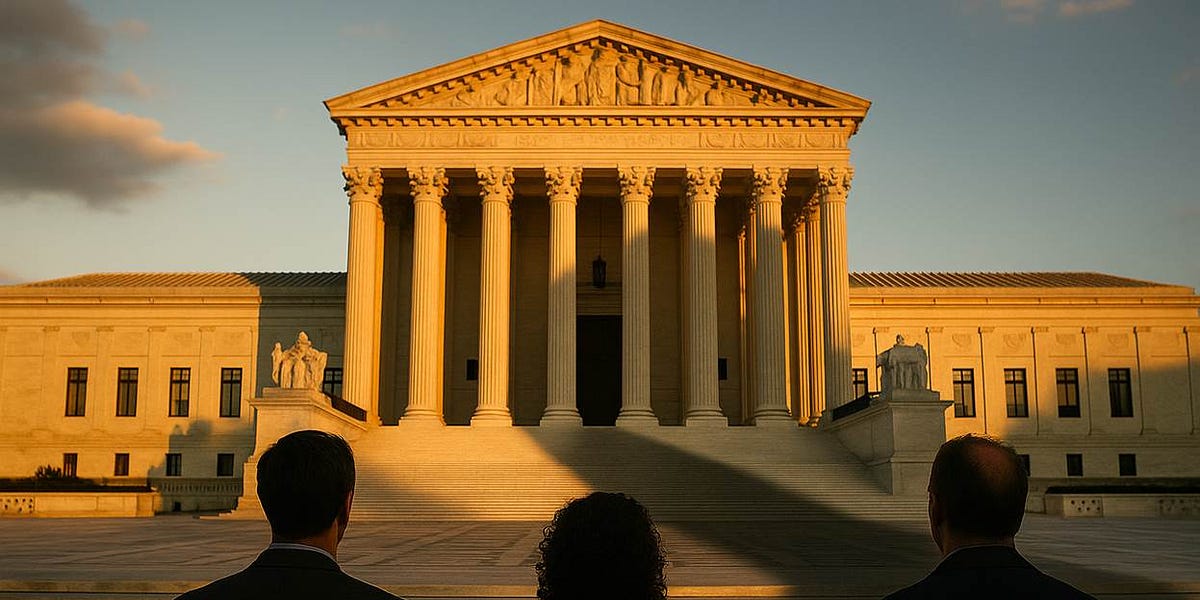
The Supreme Court of the United States

The Supreme Court of the United States stands as the most sacred institution in the judicial branch, entrusted with interpreting the Constitution and shaping the legal landscape of the nation. Its power is not derived from force or politics, but from the trust it earns from the American people. This is founded by principled decisions and unwavering dedication to justice.

Presidents hold the significant responsibility of appointing justices to the Court, a process that carries immense weight and often invites controversy. These appointments shape the future of constitutional interpretation. For the justices themselves, the role is both stressful and overwhelming. They are tasked with making decisions that can redefine societal norms, often under intense public scrutiny.

Each year, the Court receives approximately 7,000 cases, most of which are appeals. The justices meet weekly to determine which cases merit their attention, carefully selecting those with the greatest constitutional significance. Unlike other branches of government, the Supreme Court does not proactively seek issues—it waits for the people to bring their problems forward. This reactive nature underscores its role as a guardian of the Constitution rather than a political actor.

In their deliberations, justices vote alone, without influence from others, and then write their opinions to explain their reasoning. Oral arguments play a pivotal role in shaping these decisions, offering a dynamic space for legal ideas to be tested and refined.

The Court has no hidden agenda or secret operations. Its transparency and adherence to constitutional principles are what make it revered. As Chief Justice John Marshall once exemplified, the Court must always remember: “We must never forget it is the Constitution we are embodying.” From landmark cases like Dred Scott’s fight against slavery to modern-day rulings, the Supreme Court remains a symbol of justice, integrity, and the enduring power of law.


AI Disclose: After taking notes while watch the Supreme Court video, I used Microsoft copilot to smooth the text and format it in a readable way. I then edited the AI-genererated text. I added photos and captions. I also broke up the text with subheading. I expanded on the AI generated text by adding some of my personal thoughts and options.